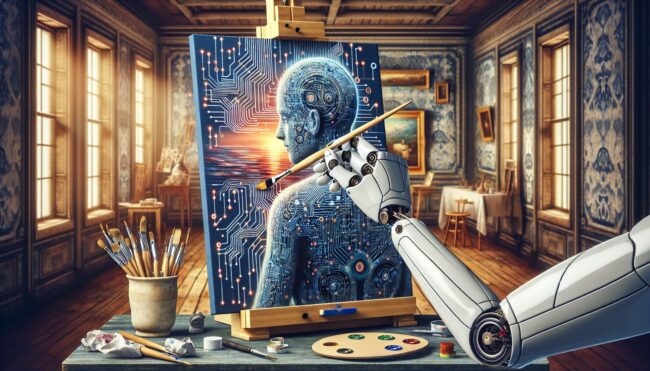
Hey tech explorers! Today, I want to talk about something that’s been buzzing in both tech circles and the creative world: artificial intelligence making waves in the arts. You might’ve seen headlines about AI painting canvases, composing symphonies, or even penning novels. It’s like a scene straight outta sci-fi, only it’s happening right now. But what does it really mean for us poor humans—artists, techies, and admirers of all things beautiful? Let’s break it down.
The AI Art Renaissance
Robots With a Paintbrush
Okay, maybe not literally robots with paintbrushes, although that would be a sight. But AI has definitely strutted into the art world like it owns the place. Have y’all heard of AICAN? This AI isn’t just generating art but doing it in a way that even old masters like Rembrandt might raise an eyebrow at. By analyzing tons of art data, AICAN and its buddies can create paintings that blend existing styles with something completely new. The kicker? Some people can’t even tell it’s AI. We’ve entered this weird, exciting zone where AI art hangs on gallery walls beside human-made pieces.
From Mozart to Robo-Bach
If you thought classical music was all about aging concert halls, think again. AI is shaking up the music scene too. Take OpenAI’s MuseNet, for example. This nifty program can compose music in the style of Bach, The Beatles, and even Beethoven, with a twist of modern pop if you’re feeling adventurous. It’s like having a jam session with musical legends across time. Purists might scoff, claiming it lacks the soul or intention of human composition. But you know what? It’s mind-blowingly cool to think about a future where your favorite band could be AI-made, with tunes that hook you from the first beat.
Creativity: Human-Only Exclusive No More?
Redefining Creativity
So here’s the million-dollar question: what does this say about creativity? Can silicon really match a human’s soulful spark? Sure, AI isn’t sipping coffee in Paris under the dawn sky for inspiration, but it has other strengths. It doesn’t get artist’s block, for one. It can mash up styles, pull knowledge from extensive datasets, and work tirelessly to generate creative pieces, often with astonishing results. Rather than seeing AI as competition, what if we view it as a collaborator? Suddenly, the canvas for what art can be starts to look a lot broader.
Working With the Cold Collaborator
I’ve personally fooled around with some AI tools in music production, mostly out of curiosity. I loaded up loops generated by an AI and mixed them with my own beats. The outcome was, surprisingly, a track I’d pop into a playlist. It wasn’t just “okay for AI”; it was genuinely good. The AI pushed me to think outside my usual patterns and open my mind to sounds I wouldn’t have otherwise considered. You see, the magic happens when humans and AI create together, blending our own essence with AI’s technical prowess.
The Road Ahead: Challenges and Opportunities
The Good, the Bad, and the Algorithm
While it’s easy to get starry-eyed about a future where creatives work hand-in-hand with AI, there are challenges we can’t ignore. Intellectual property debates are heating up: who owns AI-generated content? The coder? The user manipulating the algorithms? Or the AI, if it could claim rights? It’s a legal rabbit hole that continues to unfold.
Then there’s the fear of AI reducing the value of human skills. Will people still appreciate or pay for human-made work when an algorithm can churn it out in minutes? The key could be in distinguishing uniquely human elements in art: emotion, story, intent.
Future Visions and Speculations
Looking forward, there are plenty of possibilities that make you wonder. Imagine Taylor Swift co-writing with an AI assistant for her next album, or the next big Marvel movie being scripted by a bot (with some human heart infused, of course). This partnership could herald a golden era of creativity, with challenges spurring artists to redefine what it means to be expressive and original in a tech-driven world.
Conclusion: Welcome Your New Muse
In wrapping up this whirl through AI in the arts, I’d say it’s clear there’s no going back. We’re at a crossroads where humans and machines are not just interacting but co-creating. And isn’t that what creativity is all about? Finding new ways to see the world? Whether you’re the next Picasso, a budding indie musician, or just a tech enthusiast marveling at the horizon, there’s no better time to be part of this wild experiment. So, let’s welcome this new muse, ride the wave of innovation, and see what remarkable things we can make together. Happy creating!