Open post

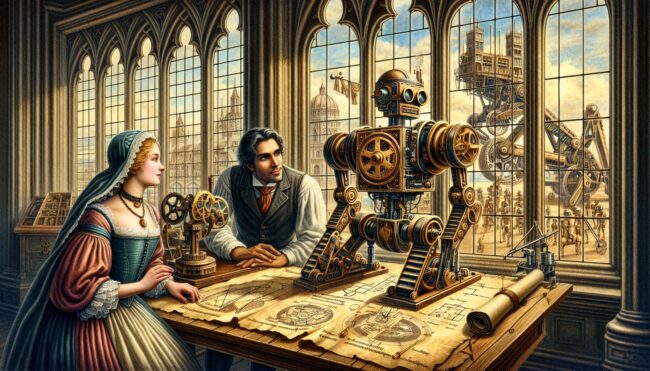
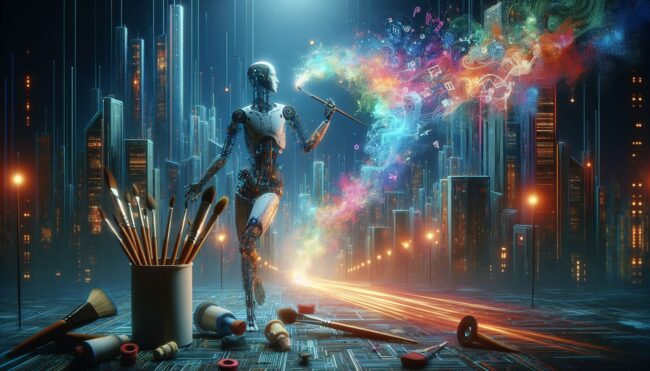
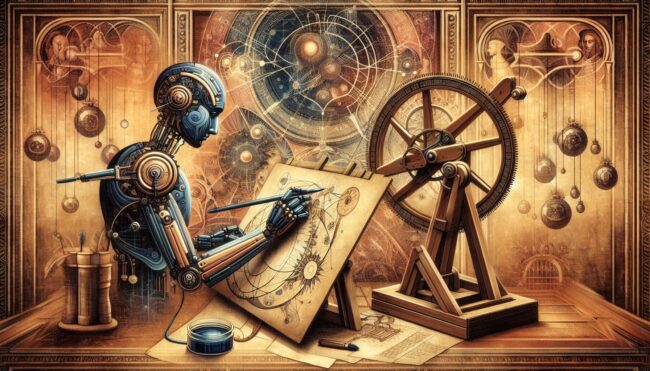
the AI Pop Renaissance: Meet Your New Creative Companion

Hey tech aficionados, I hope you’re ready because today, we’re diving into one of the most exhilarating topics out there: AI in creative arts. It’s not just about teaching computers to paint like Van Gogh or compose symphonies on par with Beethoven. It’s about bringing a whole new layer of inspiration and innovation to human creativity. Get comfy, maybe grab some coffee, because we’re about to explore how AI is changing creative expression. Trust me, this is as close as it gets to feeling like a kid again, entranced by a whole new world.

What’s Happening in the World of Creative AI?

It’s 2023, and AI isn’t just playing backup singer anymore. It’s stepping into the creative spotlight. Picture this: a machine that doesn’t just replicate art but generates it with originality and flair. We’re talking about AI that can write poetry, compose music, produce films, and even perform stand-up comedy. Yep, you read that right. Our silicon buddies are learning to joke around with us!

A couple of notable superstars in the space include GPT-4 by OpenAI, renowned for its mind-blowing ability to generate text that’s not only grammatically correct but feels authentically human. Then there’s DALL·E, a model that can generate detailed visual artwork based on written prompts. These aren’t just cool toys to play with. They’re foundational shifts in how we perceive and interact with the creative process.

Machine as Muse: New Frontiers in Artistic Expression

Alright, so the $64,000 question is: what does this mean for artists, you know, the right-brain thinkers who’ve been holding the creative keys forever? Are they being replaced? Nah, it’s more like they’re getting supercharged.

Writers and Storytellers, Meet Your AI Helper

Writers traditionally have thrown up their hands in frustration staring at blank screens, drowning in coffee and self-doubt. Now, they’ve got a digital friend whispering ideas and plot twists. Imagine starting a novel and using GPT-4 to brainstorm plot details or craft dialogue. It’s like having a co-writer who never sleeps or battles procrastination.

Let’s not ignore ethical dilemmas here. Issues like originality and authenticity are hot topics. But used wisely, AI is more like an expansive new toolkit rather than an Orwellian threat to creativity.

Composers Get Composable

Remember those times when traditional composers spent endless months trying to crack the perfect symphony? AI’s stepping up to collaborate. Companies like Amper Music are making it possible for musicians to generate entire compositions in minutes. But here’s the beauty: it’s not about replacing composers or diminishing their role. Imagine it as a musically inclined friend who’s excellent at jamming and infinitely patient while you experiment.

Visual Artists and Augmented Imagination

And let’s chat about our visual creatives. Platforms like DALL·E 2 open up unprecedented opportunities for visual artists, helping them visualize raw concepts without the usual constraints of physical tools or materials. Artists are now seeing AI as a partner that helps them see beyond the horizons of current artistic conventions.

It’s Not All Sunshine: Challenges in the AI-Art World

Alright, before we start thinking AI’s just the magical cure-all, let’s pump the brakes and acknowledge the gray clouds on this otherwise sunny day. The entry of AI in the creative sphere isn’t without its challenges.

The Aesthetic Dilemma

One of the more critical questions is “What makes art, art?” Is it the human touch, the flaws, or the emotional struggles behind the creation? If so, can AI art have the same authenticity? This conversation is ongoing, and while there aren’t any clear-cut answers, it prompts us to reimagine the essence of creativity.

Copyright Conundrums

Remember our friend Napster that rocked the music copyright boat ages ago? History, folks, has that nasty habit of repeating itself. Right now, legal experts are having a field day considering who owns the rights to AI-generated works. Is it the algorithms, the creator of the AI, or the person issuing prompts? The field is still muddy, and it’ll take substantial policymaking to sort it all out.

What’s Coming Next

If you think this is the pinnacle of AI in creative arts, hold onto your keyboard because we’re just scratching the surface. I can picture a world where art and cityscapes come alive in real-time, adapting to our mood waves like an organic being. AI will continue empowering us to merge disciplines, blurring the lines until they’re practically non-existent.

Yes, the road ahead is full of ethical hurdles and technical challenges. But isn’t that precisely what makes any ride worth taking? Art, like life, changes through challenges, stories, and shared experiences. So embrace your AI collaborators. Tomorrow, you just might find a whole new muse in unexpected places.

Thanks for joining me on today’s exploration, folks! Feel free to sound off in the comments or drop me a message. Until next time, stay curious and keep creating!
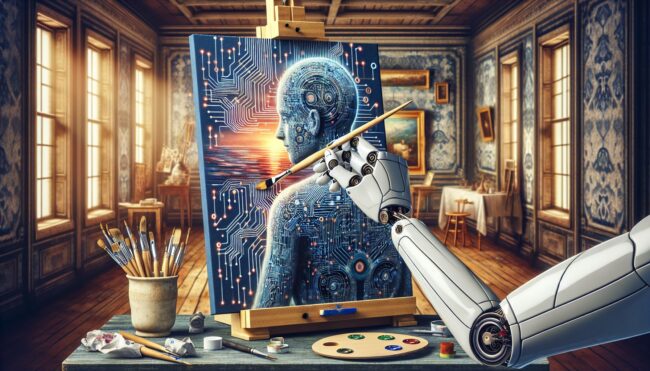
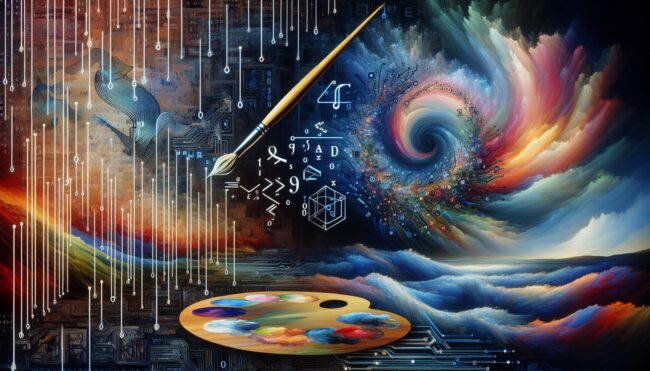
Open post

Artificial Intelligence Meets Creative Arts: Is it the Perfect Muse?

Hey tech explorers! Today, I want to talk about something that’s been buzzing in both tech circles and the creative world: artificial intelligence making waves in the arts. You might’ve seen headlines about AI painting canvases, composing symphonies, or even penning novels. It’s like a scene straight outta sci-fi, only it’s happening right now. But what does it really mean for us poor humans—artists, techies, and admirers of all things beautiful? Let’s break it down.

The AI Art Renaissance

Robots With a Paintbrush

Okay, maybe not literally robots with paintbrushes, although that would be a sight. But AI has definitely strutted into the art world like it owns the place. Have y’all heard of AICAN? This AI isn’t just generating art but doing it in a way that even old masters like Rembrandt might raise an eyebrow at. By analyzing tons of art data, AICAN and its buddies can create paintings that blend existing styles with something completely new. The kicker? Some people can’t even tell it’s AI. We’ve entered this weird, exciting zone where AI art hangs on gallery walls beside human-made pieces.

From Mozart to Robo-Bach

If you thought classical music was all about aging concert halls, think again. AI is shaking up the music scene too. Take OpenAI’s MuseNet, for example. This nifty program can compose music in the style of Bach, The Beatles, and even Beethoven, with a twist of modern pop if you’re feeling adventurous. It’s like having a jam session with musical legends across time. Purists might scoff, claiming it lacks the soul or intention of human composition. But you know what? It’s mind-blowingly cool to think about a future where your favorite band could be AI-made, with tunes that hook you from the first beat.

Creativity: Human-Only Exclusive No More?

Redefining Creativity

So here’s the million-dollar question: what does this say about creativity? Can silicon really match a human’s soulful spark? Sure, AI isn’t sipping coffee in Paris under the dawn sky for inspiration, but it has other strengths. It doesn’t get artist’s block, for one. It can mash up styles, pull knowledge from extensive datasets, and work tirelessly to generate creative pieces, often with astonishing results. Rather than seeing AI as competition, what if we view it as a collaborator? Suddenly, the canvas for what art can be starts to look a lot broader.

Working With the Cold Collaborator

I’ve personally fooled around with some AI tools in music production, mostly out of curiosity. I loaded up loops generated by an AI and mixed them with my own beats. The outcome was, surprisingly, a track I’d pop into a playlist. It wasn’t just “okay for AI”; it was genuinely good. The AI pushed me to think outside my usual patterns and open my mind to sounds I wouldn’t have otherwise considered. You see, the magic happens when humans and AI create together, blending our own essence with AI’s technical prowess.

The Road Ahead: Challenges and Opportunities

The Good, the Bad, and the Algorithm

While it’s easy to get starry-eyed about a future where creatives work hand-in-hand with AI, there are challenges we can’t ignore. Intellectual property debates are heating up: who owns AI-generated content? The coder? The user manipulating the algorithms? Or the AI, if it could claim rights? It’s a legal rabbit hole that continues to unfold.

Then there’s the fear of AI reducing the value of human skills. Will people still appreciate or pay for human-made work when an algorithm can churn it out in minutes? The key could be in distinguishing uniquely human elements in art: emotion, story, intent.

Future Visions and Speculations

Looking forward, there are plenty of possibilities that make you wonder. Imagine Taylor Swift co-writing with an AI assistant for her next album, or the next big Marvel movie being scripted by a bot (with some human heart infused, of course). This partnership could herald a golden era of creativity, with challenges spurring artists to redefine what it means to be expressive and original in a tech-driven world.

Conclusion: Welcome Your New Muse

In wrapping up this whirl through AI in the arts, I’d say it’s clear there’s no going back. We’re at a crossroads where humans and machines are not just interacting but co-creating. And isn’t that what creativity is all about? Finding new ways to see the world? Whether you’re the next Picasso, a budding indie musician, or just a tech enthusiast marveling at the horizon, there’s no better time to be part of this wild experiment. So, let’s welcome this new muse, ride the wave of innovation, and see what remarkable things we can make together. Happy creating!

Open post

Artificial Intelligence in Creative Arts: Painting the Future with Algorithms

Hey, tech enthusiasts! Today, I’m jumping into a subject that’s been causing quite the buzz on the internet: Artificial Intelligence in Creative Arts. Yep, we’re watching a creativity revolution happen, folks, and it’s moving faster than you can say “deep learning.”

The Dawn of AI Artistry

Let’s face it: when we first heard about AI stepping into the realm of the arts, a lot of us were skeptical. I mean, aren’t creativity and emotion purely human? Well, as it turns out, the lines are blurring and it’s mind-blowing. From painting to composing music and even writing poetry, AI is breaking boundaries and exploring parts of creativity we never thought possible for a machine.

Take the case of DALL-E by OpenAI. This little genius can generate images from textual descriptions, connecting imagination with visual representation. Want a picture of a “cosmic flamingo drinking latte on the moon”? DALL-E’s got you covered. It’s like having a world-class artist on command, except this one works 24/7 and never demands coffee breaks.

Pixels to Masterpieces: The Tech Behind AI Art

What makes AI art tick, you ask? It’s basically a mix of neural networks, machine learning, and loads of data crunching. The key players in this field use Generative Adversarial Networks (GANs) to create jaw-droppingly realistic pieces. Introduced by Ian Goodfellow in 2014, GANs are all about pitting two neural networks against each other to produce original content.

Imagine giving an art student and a critic an infinite canvas and a whole library of art history to learn from. The GAN model has two nets, the generator (the art student) and the discriminator (the critic). Together, they work in tandem until the generator creates something indistinguishable from the real deal. And let me tell you, some of the results are so mind-bending they make you wonder if they’ve tapped into an alternate universe’s creativity pool.

AI Songs and Symphonies

It’s not just visual art getting a tech makeover. Music is also feeling the AI vibe. Meet Aiva, an AI composer who’s been writing original scores for film, games, and even symphonies. It’s like having Beethoven with a silicon brain. Interestingly, Aiva’s music isn’t soulless. Instead, it’s a weird fusion of mathematical precision and emotive resonance that both delights and intrigues.

Of course, some purists might grumble at the thought of machines taking over this most human of endeavors. But let’s remember, folks, when electric guitars first came out, the world was certain rock was dead. Spoiler alert: it only got louder and more electrifying.

AI’s Brush with Fame: Real-World Applications

You might be wondering, “Okay, but where’s the real-world impact?” Glad you asked. The applications are happening in exciting ways, both in the gallery and the entertainment industry.

In 2018, an AI-generated artwork titled “Edmond de Belamy” sold at a Christie’s auction for over $430,000, a clear sign that AI art isn’t just a tech novelty. It’s becoming a serious industry player. Plus, there’s the rise of AI in film. Walt Disney and other big studios are exploring ways AI can automate animation or improve visual effects, cutting down on tedious tasks and opening up a realm of new creative possibilities.

The Ethical Canvas: Challenges and Considerations

No discussion about AI in the creative arts would be complete without touching on the good ol’ debate about ethics. Who really owns an AI-created piece? The developer, the model, or the machine itself? This question makes my brain hurt, and probably yours too!

Then there’s the fear of job displacement. Could painters, musicians, and writers be out of a job? Well, history shows us that technology, while disruptive, often creates new roles and opportunities. Remember, there was panic when photography was invented, yet portrait painting still thrives, just in a different way.

A Bold Brushstroke into the Future

Looking forward, the potential is both staggering and exhilarating. We may very well be entering an era where human collaboration with AI leads to art forms we’ve yet to even imagine. Picture this: artists of tomorrow could be more like conductors, orchestrating an ensemble of AI networks to create multi-sensory experiences, each gesture and note a triumph of man and machine.

Could we see an AI-driven renaissance? The romantic in me likes to think so. But regardless, as the canvas of technology continues to expand, it’s clear one thing won’t change: our relentless pursuit of beauty and expression. In the end, what is art if not an exploration of the possibilities?

So, let’s cheers to a future where creativity crosses both human and algorithm lines, where a new kind of muse inspires us to innovate and dream bigger. I can’t wait to see (or hear) what comes next. How about you?

Keep imagining the impossible, folks, because in this tech-driven world, it just might not be.

Catch you on the flip side,
[Your Name]

Open post

The Renaissance of Robotics: A New Era of Automation and Adventure

Ah, robots. We’ve fantasized about them, feared their uprising, and sometimes even wished they’d just show up and do the dishes. But now, it feels like we’re actually seeing something big happen. It’s like we’re living in the golden age of robotics, think of it as the Renaissance period, but instead of art and cathedrals, we’re getting self-driving cars and robot vacuums. I’m not saying it’s better than Michelangelo, but it’s something to get excited about. So let’s jump into this metal-clad world and see what’s happening.

Robots at Work: From Factories to Farmlands

Let’s kick things off with the workhorses of the robot revolution. For years, robots have been stuck on factory floors, doing the heavy lifting, assembling cars with precision that would make any Swiss watchmaker proud. But now, these bad boys are spreading their wings, or more accurately, their robotic arms, into new territories.

Imagine waking up to a morning where drones buzz around farms like mechanical bees, optimizing crop yields and saving farmers precious time and resources. Companies like John Deere aren’t just about tractors anymore. They’re jumping headfirst into this futuristic farm bot world. And here’s the kicker: some of these bots can analyze soil health and predict weather patterns. Welcome to farming 2.0.

The Rise of the Service Bots

While it’s fun to imagine Terminator-style machines serving coffee, the reality might be slightly less action-packed but no less cool. Service robots are about to become a fixture in our daily lives, and they’re not just your friendly neighborhood Roomba anymore.

Japan is pretty much leading the charge here (no surprise), with robots in hotels, shops, and even nursing homes. These bots don’t get tired, don’t need lunch breaks, and best of all, they can offer assistance without that awkward small talk. Think about how useful they’ll be in an aging society. They could change the game in elder care, providing around-the-clock support with patience and efficiency that even the most seasoned caregivers might envy.

The Human Touch: Robotics in Healthcare

Okay, now let’s talk healthcare robots. It’s not just science fiction anymore. Robots are already assisting in surgeries with levels of precision that could shame a laser-guided missile. The da Vinci Surgical System is a perfect example and has successfully handled thousands of procedures globally.

Beyond the operating room, robots are also lending a helping hand (sometimes literally) with rehabilitation. Picture a robot gently assisting a stroke patient to regain mobility. These innovations don’t replace the human touch but rather complement it, enabling healthcare workers to focus on the more complex aspects of patient care.

From the Streets: Autonomous Vehicles

Ah, self-driving cars. The holy grail of robotics for anyone who’s ever sat in bumper-to-bumper traffic. While Elon Musk and Tesla are the poster children in this space, they’re not the only chefs in the kitchen. Google’s Waymo is a strong player and they’ve been making real strides in deploying autonomous taxis.

The dream? A world where you can read your morning emails while your car smoothly navigates through rush hour like it’s playing a leisurely game of chess. The challenge? Perfecting these systems in environments as chaotic as they can be. Kudos to those brave enough to beta test these bots, because, let’s face it, humans don’t always play nice on the road.

Challenges and Concerns: The Road Ahead

While there’s plenty to be thrilled about, we’ve got some hurdles to jump over. The ethics surrounding job displacement is a biggie. The rise of robots has the potential to change work forever, and not everyone’s excited about that. Are we ready for a future where robots take over roles humans have traditionally held? What happens to those jobs?

Then there’s the technical aspect, reliability. As cool as it’d be to hand over the wheel to an automated chauffeur, there’s a nervous side-eye glance whenever we do. It’s all great until your robot driver throws a digital tantrum in the middle of the highway.

A Glorious Futuristic Horizon

So what does the future hold? The optimist in me is doing a happy robot dance. Sure, challenges exist, but the potential here is enormous. We’re standing at the edge of an era where robots can do more than mimic human action. They’re ready to enhance our human experience.

Imagine a world where mundane tasks are left to our mechanical friends while we pursue creative, intellectual, and emotional endeavors. It’s a future that’s less about replacing humans and more about redefining what we can accomplish. And isn’t that the dream?

At the end of the day, embracing the age of robotics requires a careful dance between enthusiasm and caution. But let’s face it, if there’s a time to be alive for tech enthusiasts, it’s now. As we eagerly await the next breakthrough, I for one am excited to see where this metal road leads.

Who knows? Maybe the next big leap involves a robot writing my next blog post. Wouldn’t that be something? But until then, it’s all me, with a little help from my trusty typing fingers. And possibly a cup of coffee brewed by a caffeinated robot barista. Cheers to the future!

Open post

The AI Revolution: Artistic Alchemy in the Creative Arts

Hey there, fellow tech enthusiasts! Today, I’m jumping into the wild intersection of Artificial Intelligence and creativity. If you’ve ever wondered if there’s a tech domain where AI isn’t making waves, spoiler alert: it’s everywhere, especially in the arts! I’ll share some of the most exciting developments I’ve come across and think through what this new world of AI-powered creativity might mean for us all. Let’s jump in!

The Canvas Has Changed: AI as the Artist

Remember when your high school art teacher said art is all about expression, imagination, and the human touch? Well, meet AI, the student who’s picking up the brush and completely rewriting the rules! Tools like OpenAI’s DALL-E and Google’s DeepDream aren’t just footnotes in AI’s creative story. They show how algorithms are understanding artistic styles and creating their own.

The Artists of Tomorrow

Picture this: An artist sitting in a café, laptop open, brainstorming their next masterpiece not with pencil and sketchbook, but with a few lines of code and an AI assistant. If that sounds like sci-fi, think again. These days, creatives collaborate with algorithms to explore new artistic territories, pushing boundaries that seemed impossible before. AI-generated art shows up in galleries now, challenging our ideas about authorship and creativity. Who’s the real artist? The coder, the AI, or both?

Algorithm as Muse

Before your inner Da Vinci starts rolling in its grave, consider how AI offers fresh perspectives and ideas. It’s more partner than replacement. Artists use AI to suggest unexpected color palettes, compositions, and abstractions. Programmers build the framework, but artists shape it into something meaningful. Think of AI as the ultimate muse. One with infinite patience and endless curiosity.

The Sonic Boom: AI in Music

Art isn’t the only creative field getting a tech makeover. Music has been transformed too. AI-generated tracks hit the airwaves regularly, and before you ask, no, it’s not all just bleep-bloop electronica.

A Symphony of Code

Take AI composers like AIVA (Artificial Intelligence Virtual Artist), designed to write emotional symphonies. From dramatic orchestral scores for films to catchy pop hooks that might get stuck in your head, AI works across genres. Imagine tuning into your favorite radio station and learning the catchy new hit was composed by a bot. Mind-bending, right?

Duets with Robots

Smart musicians use AI to enhance their work rather than replace it. They feed algorithms different music styles, experimenting with new genres, rhythmic patterns, or melody structures. The result? Human-AI jam sessions that produce tracks feeling fresh and sometimes eerily perfect.

The Implications: What Does This Mean?

The marriage of AI and the arts creates some beautiful harmony, but also some serious discord. Using technology in creative processes might lead to artificial creativity or watered-down originality. Is art less meaningful if a machine made it? Can an algorithm feel? These questions make dinner-party debates way more interesting, though we’re nowhere near answers.

Democratizing Creativity

One promising development is how AI democratizes creativity. AI empowers people without classical training to express their artistic visions, breaking down barriers created by limited access to education or resources. All you need is a computer and a creative spark. The algorithms handle the technical stuff.

Ethical Conundrums

We’re also wading into ethically murky waters. Who owns artwork created by AI? Lawsuits and policy debates are everywhere as we try answering questions that never existed before. With AI-generated art becoming common, we might need to completely rewrite intellectual property definitions.

Into the Future: What’s Next?

Standing at this crossroads, I can only guess what artistic breakthroughs are coming. Imagine museums filled with AI-generated pieces, or massive live performances directed by complex algorithms. Would these experiences hit you emotionally the same way as human-crafted art? Honestly, I have no idea.

AI in Film, Theatre, and Beyond

The next frontier might be narrative storytelling, an industry ripe for AI enhancement. Picture movies where AI helps craft unpredictable yet compelling story arcs, and theatre productions that change in real-time based on audience reactions. This sounds like science fiction, but it’s already happening in early stages around the world.

Wrapping It Up: Art’s New Horizon

Bringing AI into creative arts feels like the start of an artistic renaissance, a bubbling pot of potential waiting to be explored. It might ruffle traditionalists’ feathers, but it’s an exciting time for anyone open-minded about what art is and who gets to create it.

So, as we keep pushing boundaries, let’s celebrate this era of possibilities where humans and machines compose, paint, and perform together. Here’s to innovation that challenges our assumptions while expanding our creative horizons. Whatever comes next, I can’t wait to see what masterpieces emerge from this digital experiment!

Open post

The AI Uprising: Creativity Gets a Digital Muse

Hey fellow tech aficionados! Today, we’re diving into something that’s been buzzing around our digital hives—AI in the creative arts. Yep, artificial intelligence is stepping out of the server room and plopping itself right in the middle of the artist’s studio. Whether it’s composing symphonies or designing mind-bending visual art, AI is mingling with creativity like never before. And if you’re imagining digital Picassos and robotic Mozarts, you’re not too far off. So grab your digital paintbrushes and let’s get colorful!

A Canvas of Code: Where It All Begins

AI and creativity—sounds like a partnership forged at a Burning Man afterparty, right? But really, it’s more of a methodical match made in machine learning labs. Here’s the lowdown: these art-loving algorithms sift through massive datasets, spotting patterns and absorbing human quirks like a sponge. It’s like they’ve got an all-access pass to the Museum of Human Creativity. This foundational data becomes the launchpad for AI to start experimenting with its own brand of creativity.

Take DALL-E, the brainchild of OpenAI. It can whip up a never-seen-before piece of art with just a few textual cues from you. Tell it to paint “a surreal landscape featuring a flamingo with a smartphone” and—voila!—you’ve got yourself a digital masterpiece!

The Sound of AI Music

Now let’s chat about music, because who doesn’t love a digital symphony—or at least the idea of one? AI has been tickling the ivories and plucking the strings with projects like Google’s Magenta. This AI can spin melodies that range from charmingly simple to mind-bendingly complex. Remember that viral Beethoven 10th Symphony completion? AI had a big hand—or should I say algorithm—in that composition.

AI’s musical abilities raise some eyebrow-arching questions. Can machines capture the soulfulness of a blues riff or the anguish in a flamenco guitar? Maybe not yet, but they’re getting closer. They’re like that talented but introverted bandmate who keeps surprising you with unexpectedly brilliant riffs.

AI: The Silent Screenwriter

Lights, camera, algorithm! AI is getting screen time too—in scriptwriting. Automated storytelling engines like SeedAI have been working their silicon off, helping aspiring writers brainstorm plot twists and character arcs. The potential is thrilling: imagine an AI helping you co-write the next Oscar-winning screenplay. Just don’t ask it to make you popcorn; multitasking isn’t its strong suit.

Scriptwriting AI still struggles with the human elements—like emotional depth and humor, although some scripts produced by humans make us question our very humanity sometimes, don’t they? With each iteration, AIs are inching closer to mastering even these complex, human emotions.

Brushes of Tomorrow: Visual Art and AI

Alright, onto visual art. This is where AI shows off its wild capabilities in styles that range from the Renaissance to downright futuristic. Generative Adversarial Networks (GANs) are the sketching hands behind those mesmerizing visuals you see all over Instagram these days. Think of GANs as a battleground where two AI models, the generator and the discriminator, duke it out to create visuals that dare you to look away.

There’s a case in point from Christie’s: an AI-generated portrait that sold for a whopping $432,500. And here I am, still bartering digital stick figures! Jokes aside, AI has huge potential to democratize art, opening the floodgates for everyday creatives without conventional training.

Beyond the Horizon: Ethical Quandaries and Future Prospects

AI’s budding role in creative domains prompts some thorny ethical musings. Can art generated by AI be genuinely “authored”? Who deserves credit, the human programmer or the machine? Picture an AI artist with its own fanbase—good luck getting its autograph!

These concerns are real, but the future still buzzes with possibility. Imagine classrooms where AI tools nurture young Picassos, or AI units that solve humanity’s toughest challenges through art. Sounds utopian, and maybe a bit of a Sci-Fi Friday night, but we’re already on this wild trajectory.

Wrapping It Up with Digital Flourishes

Let’s be real—AI is not here to replace artists, but to amplify creativity itself. Think of AI as the saucy sidekick, the witty apprentice, the co-pilot of imaginative dreams! This technological shift lets us humans—beautifully flawed and ceaselessly curious—explore new territories of innovation.

So, next time you’re faced with a blank canvas, remember there’s a digital muse ready to lend a helping interface. And who knows? In years to come, we’ll look back at this era as the dawn of a symbiotic relationship between humans and machines in art, changing our creative possibilities forever.

Stay inspired, stay curious, and, who knows—maybe your next creative project will have a bit of digital flair, courtesy of your AI partner in art-crime. Keep creating!

Open post

Embracing the Creative Renaissance: AI in the Arts

Hey, tech enthusiasts! Grab your coffee, take a comfy seat, and get ready to dive into today’s intriguing topic: Artificial Intelligence in the creative arts. I know, I know—it might sound like mixing oil and water, right? But trust me, some crazy cool things are happening in this space, and I can’t wait to tell you all about it. Let’s get into it!

Setting the Scene

Picture this: a world where algorithms hum along like hummingbirds, generating artworks, music, and even literature, each piece as emotive and original as those crafted by human hands. Sounds like a sci-fi novel, doesn’t it? But it’s not. It’s happening. Right here, right now. AI is muscling its way into the world of creativity, and while some are worried we’ll soon be replaced by machines with better brushstrokes or smoother prose, I’m personally jazzed about the possibilities.

The Magic Behind the Curtain

So, how’s it all happening? Enter machine learning, the showstopper of AI tech that’s been shaking things up. OpenAI’s GPT series, for instance, is a prime example. These models can churn out everything from heartfelt sonnets to quirky sci-fi plots. Deep generative models like GANs (Generative Adversarial Networks) are creating visual masterpieces that make you question, “Was this framed by human hands or triggered by a clever bit of code?”

Programs are being “trained” on thousands of images, styles, and musical notes to create fresh combinations that delight and inspire. It’s like having a paintbrush that, instead of dipping into a palette, channels the talent of thousands of artists past and present.

Musical Masterpieces and AI Orchestrations

Hold onto your headphones, because AI’s influence on music is a symphony in progress. Platforms like AIVA (Artificial Intelligence Virtual Artist) are composing beautiful scores for filmmakers, video games, and advertising. These compositions add an extra layer of creativity to productions that might have otherwise been financially out of reach for independent creators.

Just think about how accenting a scene with the perfect piece of music can elevate it to new emotional levels. That’s AI at work. Don’t get me wrong, though—human composers aren’t going anywhere. They’re just gaining a new assistant, one that never needs a coffee break or a pep talk to get back on track.

Visual Arts: From Canvas to Code

Have you ever marveled at a painting so profound you could lose yourself in its brush strokes? With projects like DeepArt and Runway, AI is crafting visual pieces that are impressive and moving. I recently tried out a platform where you upload a photo, choose an artistic style, and bam—your snapshot is transformed into something that could easily hang in a gallery. It blew my mind (and saved me a small fortune on art classes).

Writers, Poets, and Storytellers: AI’s Written Word

This is where my personal interest gets piqued—AI’s role in writing. Full disclosure: as a writer myself, I went through the whole “robots taking my job” phase. But then I let AI help me brainstorm plot ideas, and it all changed. Instead of fearing the blank page, I’m now equipped with a digital companion whispering ideas, offering alternative phrases, and even creating new story arcs when I hit a plot wall.

AI isn’t just spitting out words. It’s interpreting styles, capturing narratives, and respecting the subtle details that make human stories so captivating. It’s like teaming up with a co-author who never demands a 50-50 cut of the royalties.

The Debate: Human Touch vs. Algorithmic Artistry

With all these breakthroughs, there’s a pretty hefty debate brewing over authenticity. Can a piece created by AI ever hold the same value as one created by a human? It’s an ongoing conversation, with purists standing firm on the sanctity of human-centric creativity while others (like me) are more than willing to pour another cup of coffee and see where this innovation takes us.

There’s something deeply fascinating about where humanity and technology meet. By collaborating with AI, we’re not eliminating creativity, but rather expanding its boundaries. Sure, today’s AI creations aren’t replacing the Mona Lisa, but they’ll certainly make you pause.

Looking Ahead: A Creative Utopia?

So where is this all headed? If you ask me, things are getting pretty exciting. I see a world where even more diverse artistic expressions burst forth, fueled by this partnership of organic and digital creativity. Emerging artists could use AI to craft portfolios in a fraction of the time. Musicians might compose entirely new genres thanks to inspiration from algorithms that have no attachment to the ‘rules’. And we writers? We’ll continue to weave tales with or without AI assistance, but, let’s be honest, a little help never hurt.

As we stand at the dawn of this new creative renaissance, it’s less about pitting man against machine and more about embracing what could be achieved together. Let’s celebrate this blend of tradition and technology and see where it takes us.

In the end, it’s all about the human touch, and as long as we’re steering the ship, creativity has a chance to be more diverse and rich than ever before. What’s your take? Hit me up in the comments; I’d love to hear your thoughts!

Until next time, stay curious and keep creating.

Open post

The Bright Future of Longevity: A Tech-Savvy Look at Extending Human Lifespan

Longevity technology has been making headlines lately, and honestly, it’s about time. Sure, we’re still fighting cancer and Alzheimer’s, but there’s a bigger picture here: how do we actually extend human lifespan while keeping people healthy and happy? This isn’t just some sci-fi fantasy anymore or another Silicon Valley money grab. It’s real science happening right now, combining breakthroughs in biotech, AI, and medicine. I wanted to dig into what’s actually happening in longevity tech and what it means for those of us obsessed with the latest innovations.

The Promise of Longevity Tech

Humans have always been obsessed with living forever. From ancient myths about immortality to every adventure movie where the bad guy seeks eternal life, we’ve been dreaming about this stuff for millennia. But until recently, most scientists treated extreme longevity like it belonged in comic books.

That changed fast. We’re seeing exponential advances in technology that make longevity feel less like wishful thinking and more like the early days of the internet. The question isn’t really whether we can extend human lifespan anymore. It’s when and by how much.

Drivers of Longevity: Genomics, AI, and the Role of Data

  1. Genomics and Personalized Medicine

Genomics is completely flipping how we think about medicine. Precision medicine tailors treatments to your specific genetic makeup, which turns traditional healthcare on its head. Instead of waiting until you get sick, we can predict and prevent problems before they start. Companies are using CRISPR and other gene-editing tools not just to cure diseases, but to actually slow down aging at the cellular level.

  1. Artificial Intelligence: The Brain of Longevity

AI isn’t just changing longevity research. It’s revolutionizing it completely. Machine learning can crunch through massive health datasets faster and more accurately than any human team ever could. We’re talking about predicting health risks from your genetic data or catching diseases before symptoms even appear. AI is opening doors we didn’t even know existed.

  1. The Data Deluge

Between fitness trackers, smartwatches, and health apps, we’re creating massive amounts of health data every single day. Researchers are using this goldmine to track aging in real time, and it’s not just about your heart rate or blood pressure. Sleep patterns, diet, exercise, stress levels – it all matters. This gives us a much richer, more complete picture of how we age.

Tech Startups: The Longevity Frontier

The Rise of Biotech Startups

Over the past ten years, a whole new breed of biotech startups has emerged to tackle human longevity head-on. Companies like Calico, Unity Biotechnology, and the newer Altos Labs are bringing together everything from drug development to synthetic biology. They’re focused on stopping aging at the cellular level, which sounds like science fiction but is actually happening in labs right now.

Longevity VC Funding

Venture capitalists aren’t just funding the next social media app anymore. They’re genuinely excited about extending human lifespan, and they’re putting serious money behind it. Investment in longevity startups has exploded as these companies start showing real results and proving their concepts actually work.

Longevity as a Service (LaaS)

Here’s where things get really interesting. Just like Software as a Service changed how we use technology, Longevity as a Service is becoming a real thing. These companies offer personalized health management plans that don’t just treat illness – they provide ongoing wellness programs based on your specific health data. It’s not crazy to imagine subscribing to a service that helps you live longer and healthier.

Ethical and Societal Implications

But let’s be real about the downsides. All this technological progress comes with some serious questions about ethics, inequality, and how society actually functions.

Who Gets to Live Longer?

Right now, longevity tech is expensive and only available to people who can afford it. That’s a huge problem. Sure, the costs of genetic sequencing and AI analysis will probably come down eventually, but we need to make sure this technology doesn’t just benefit the wealthy. Making longevity treatments accessible to everyone is going to be a major challenge.

The Impact on Workforce and Retirement

If people start living comfortably past 100, what happens to work and retirement? Older workers might stay in their jobs longer, which could make it harder for younger people to find opportunities. The whole concept of career planning could change completely. We might need to rethink how our entire economy works.

The Path Forward: Challenges and Roadblocks

Despite all the excitement, there are real obstacles ahead that we can’t ignore.

Regulatory Hurdles

Technology moves fast. Government approval processes don’t. Regulatory bodies prefer slow, careful progress, which makes sense for safety but can stall innovation. We need regulatory frameworks that protect people while still allowing breakthrough research to happen.

Integrating AI in Healthcare

Using AI in healthcare is tricky. Yes, it promises incredible accuracy and insights, but we can’t lose the human element in medicine. Finding the right balance between cutting-edge technology and compassionate care is going to be crucial.

Biology’s Complexity

Human biology is incredibly complex, and we still don’t understand huge parts of the aging process. Things like cellular senescence and telomere shortening are still pretty mysterious. We’ve made progress, but there’s so much more research needed to move from just extending lifespan to actually maintaining vitality as we age.

Conclusion: Tomorrow’s Age Today

We’re living through an amazing time where AI, genomics, and biotech are completely changing what it means to grow old. Sure, there are obstacles to overcome, but the potential is incredible. I’m talking about a world where we don’t just live longer – we live better for longer.

Longevity tech isn’t some passing trend. It’s the next major frontier for innovation, and some of the smartest people in the world are already working on it. What seems like science fiction today could be your reality tomorrow.

Keep those fitness trackers charged and stay curious. You might be around a lot longer than you think to see where this all leads.

Open post

Embracing the Future: Renewed Possibilities with Longevity Tech Innovations

Welcome, fellow tech enthusiasts! I’ve been following the latest breakthroughs in technology, and today I want to talk about something that fascinates me: Longevity tech. This field sits right at the intersection of biotechnology, artificial intelligence, and futuristic medicine. What excites me most about longevity tech is that it’s not just about living longer, it’s about living better. Let me walk you through some of the most interesting innovations and the startups that are making this happen.

The Promise of Longevity Tech

Longevity used to be pure science fiction. Now? We’re on the edge of a real technological revolution. Genomics, machine learning, and biotechnology are all advancing rapidly, and when you combine them, we’re getting closer to actually extending human lifespan. Scientists are figuring out how aging works at the molecular level and decoding the biological secrets in our DNA. This means we can start targeting aging itself, not just treating its symptoms.

Cracking the Code: Genomics and Aging

Genomics is really driving the longevity movement forward. When scientists map our genetic blueprint completely, they can identify and target the specific genes and biological mechanisms that cause aging. Take Calico, backed by Google’s parent company Alphabet. They’ve poured massive resources into genomic research, hunting for genes that could slow down or even reverse aging.

Genetic Editing and CRISPR: Revolutionizing Age Management
Gene-editing tools like CRISPR have opened up incredible possibilities. Picture this: repairing broken genes that trigger age-related diseases or speed up aging. As CRISPR gets more precise, we’re looking at potential treatments for Alzheimer’s and heart disease. This could completely change what it means to age.

Artificial Intelligence: The Data-Driven Fountain of Youth

Data is powering this new wave of longevity research, and AI has become the engine that makes sense of enormous amounts of biological information. AI algorithms can predict age-related diseases, discover new drugs, and create personalized healthcare strategies that we couldn’t imagine just a few years ago.

Predictive Algorithms and Personalized Medicine
AI-driven algorithms analyze massive datasets from clinical trials, genetic data, and patient records. They’re uncovering hidden patterns between genetics and aging that humans might miss. Companies like Insilico Medicine use AI to speed up drug discovery and adapt treatments to each person’s unique genetic profile. Imagine visiting your doctor and getting a health plan that’s tailored specifically to your genes and lifestyle, updated in real-time.

Revolutionary Longevity Startups to Watch

The startup world is buzzing with longevity innovations. These companies are seriously trying to redefine aging. Here are some that caught my attention:

Altos Labs: Pioneering Cellular Rejuvenation

Founded by visionaries like Elon Musk and Jeff Bezos, Altos Labs wants to unlock cellular reprogramming. Their goal is to revert cells to a younger state and repair cellular damage, tackling aging at its most basic level. They’re combining epigenetic rejuvenation with regenerative medicine to restore youthful function to aged cells. It sounds like science fiction, but they’re making real progress.

Unity Biotechnology: Targeting Senescence

Senescence is when old cells stop dividing and start secreting harmful chemicals. Unity Biotechnology is developing “senolytic” therapies that selectively kill these problematic cells. Their early trials show promise for treating osteoarthritis and lung diseases. It’s a clever approach, removing the cellular troublemakers instead of trying to fix them.

Rejuvenate Bio: Extending Lifespan in Companion Animals

Rejuvenate Bio is taking an interesting path. They’re extending lifespan through gene therapies, starting with dogs before moving to humans. Their therapies regulate gene expression to reduce age-related symptoms and illnesses. Testing on pets first is smart, it’s easier to get approval and the results could translate to human treatments.

Societal Implications and the Long Road Ahead

Here’s where things get complicated. The promises of longevity technology are exciting, but they raise serious ethical, economic, and social questions. If we extend human life significantly, it will impact everything from resource distribution to employment and population demographics. We’re potentially looking at a world where “retirement age” doesn’t make sense anymore, and we’ll need to completely rethink life’s stages.

Ethical Questions Surrounding Longevity

  • Resource Inequality: When longevity treatments become available, who gets access? Will extended lifespans create an even bigger gap between rich and poor?
  • Impact on Evolution: If we stop natural aging processes, could we accidentally weaken our species’ ability to adapt and evolve?
  • Identity and Purpose: A 200-year lifespan might completely change how we think about achievements and purpose. Society will need to reassess everything from career paths to personal goals.

Navigating Future Possibilities

Looking ahead at longevity tech, I think we’re approaching a major turning point. The research is accelerating and startups are pushing boundaries in ways that seemed impossible just a decade ago.

Sure, there are challenges ahead. But with each breakthrough, we understand more about how aging works. It’s an incredible combination of cutting-edge science, technology, and human innovation. We’re working toward extending life while also improving it.

I’ll be keeping a close eye on this space and sharing what I learn. This isn’t science fiction anymore, it’s science in progress. We’re moving toward a world where living longer and living better aren’t mutually exclusive dreams.

Join me next time as I explore another emerging technology that’s shaking up industries. Until then, stay curious!

Tips on How to Choose the Best Toaster

When it comes to choosing a new toaster, the first thing you need to figure out is which brand you want. Sure, there are tons of different toasters out there, but the top models all have specific features that set them apart. Just be prepared to pay a bit more for quality.

The best toasters for cooking are the ones that can nail a perfect piece of toast, a flaky biscuit, or a warm muffin every time. They’re simple to clean and operate. But like I said, you’ll pay extra for that reliability compared to cheaper options.

You can also find toasters where you just remove the cover, drop it in, and put your coffee in the drip tray. This type is super handy when you’re rushing out the door and don’t have time for elaborate breakfast prep. Some people call these French toasters since that’s where this style became popular for quick meal preparation.

If your budget allows, consider getting a toaster with serious toasting power. You can even find models with built-in cooking features that go way beyond just browning bread. You can actually prepare full meals with these things.

One of the coolest things about modern toasters is how you can program them for specific foods. Look for models that can handle baking, broiling, grilling, and of course regular toasting.

When you’re shopping for a toaster, make sure it has an LCD screen so you can actually see what temperature your food is at. A digital display is pretty much essential these days. Trust me, you don’t want to end up with charcoal when you were going for golden brown.

There are also some neat money-saving features available in toasters from the same manufacturers. Some come with timers that are real time-savers. They can automatically shut off when your food is done and turn back on when it’s time for the unit to cool down.

The most important thing when buying a toaster is making sure it actually works for your needs. Pick one that has all the features you and your family will actually use. Also, look for models that can make tasty food without requiring a lot of fuss or technique.

Another big consideration is how easy the thing is to clean. After you buy a toaster, you want cleaning to be quick and straightforward.

You should also think about whether the toaster is easy to move around. You can choose lightweight models so you won’t worry about them crashing to the floor or damaging your countertop when you need to relocate them.

Convenience matters a lot too. You want a toaster that’s simple to use and makes food prep actually convenient. For example, if you eat breakfast every morning, choosing a toaster that can preheat oil for cooking will make your routine much smoother.

Then there’s the cost factor. Some people love investing in top-of-the-line models, but others are working with tight budgets and need something more affordable.

Don’t forget about the warranty either. Most toasters come with a lifetime guarantee these days.

A good warranty protects you if something goes wrong with the product. If your toaster dies before the warranty runs out, you might be able to get another one from the same brand at a discounted price.

If you want a toaster with warranty coverage longer than one year, expect to spend more upfront. But if you find models with extended warranty periods, you could save money in the long run.

Make sure you get a toaster that’s easy to maintain too. This way, you can avoid throwing money away on repairs and upkeep down the road.

Posts navigation

1 2 3 … 11 12 13 14 15
Scroll to top